IJA adds another in-person voting opportunity
NORMAN, Okla. – The Indigenous Journalists Association (IJA) will host elections online July 15-24 and in-person July 25-26. IJA membership will elect members to the nine-member board of directors. There are three vacancies for three-year terms, starting in July 2024 and running through 2027.
For online voting, eligible IJA members will receive a unique link in the email associated with their membership. Members may only cast one vote (online or in-person), and the Elections Committee will verify all votes to ensure no duplicates.
In-person voting will take place on Thursday, July 25, from 6 p.m. to 8 p.m. CST at the First Americans Museum during the Opening Night Reception and on Friday, July 26, from 1 p.m. to 4 p.m. CST at the Omni Hotel following the IJA membership luncheon during the 2024 Indigenous Media Conference in Oklahoma City.
Election results will be announced during the Indigenous Media Awards Banquet on Saturday, July 27.
2024 Board Candidates
 Melissa Greene-Blye
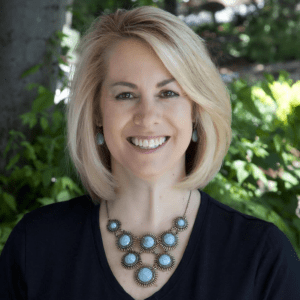
Melissa Greene-Blye is a citizen of the Miami Tribe of Oklahoma. She worked as an anchor and reporter for 20+ years, covering news in television markets big and small.
Greene-Blye is now an assistant professor of journalism at the University of Kansas, where she enjoys using her knowledge and experience to educate the newest generation of journalists.
She is the Co-director of the KU Native Storytelling Workshop, which teaches Indigenous high school students podcast, broadcast, writing, and photography skills and encourages them to consider a major and career in journalism or a media-related field.
Greene-Blye also serves as the Faculty Supervisor for Good Morning Indian Country, a student-led weekly live-streamed news program produced collaboratively by students from Haskell Indian Nations University and the University of Kansas.
Her research examines journalistic representations and negotiations of Indigenous identity past and present with the goal of improving that representation in the present moment.
 Jim Compton (“Wabung – Anung”)
The Anishinaabemowin word “Wabung — Anung” is the essence of the Morning Star.
It illuminates the power of a full moon, the birth of a new day, and a time when the Thunderbird descends to answer prayers of life for the people.
It fulfills the prophecy of the elders to those who choose to enter, dance, and carry the power of the word.
Jim Compton, an Aniishinaabe journalist from Winnipeg, Manitoba, Canada, said he works to carry out the power of that word.
“It guides our Prophet’s vision of eternal change, hope and future,” Compton said. “We know it is upon us and our stories will be our guide there.”
Compton is an award-winning journalist, director, producer, writer, and host who has worked for over 45 years. He says ” Wabung—Anung” has guided his journalism.
“It has provided my vision as a community Newspaper reporter, supper-time News Writer, broadcast Television creator, and founder of the Aboriginal Peoples Television Network,” he said.

Angel Ellis
Angel Ellis is a Citizen of the Muscogee (Creek) Nation. Growing up, her heroes had press passes rather than capes.
Ellis became Director of Mvskoke Media in 2020 and an Elias Boudinot Free Press award winner.
In November 2022, during Native American Heritage Month, the Local Media Association (LMA) recognized Ellis as one of the Indigenous people “who have positively influenced and enriched the United States.”
The film Bad Press premiered at Sundance in January 2023. It follows Ellis’s advocacy work for press freedom within Tribal Nations and was selected for the Sundance Special Jury Freedom of Expression Award.
She served as one of the NBCU Original Voices mentors in 2024 and was selected as a Democracy Day Ambassadors. Ellis serves as chair of IJA’s Free Press committee and hopes to expand on important work supporting tribal media’s press freedoms.

Alyssa London
Alyssa London is a member of the Central Council Tlingit and Haida Indian Tribe and Ketchikan Indian community. Alyssa was also a Cultural Ambassador for Sealaska Heritage Institute.
She belongs to the Eagle-Killerwhale Clan within Tlingit society, with family roots in the Killerwhale Chasing Seal House of Angoon, Alaska.
Her Tlingit name is Yáx̱ Ádi Yádi, meaning Valuable Child, honoring Alaska Native Sisterhood (ANS) activist Amy Hallingstad.
Alyssa serves on the board of Shee Atika Inc., her urban village corporation, and was a Cultural Ambassador for Sealaska Heritage Institute.
She is the CEO of Culture Story, a media company showcasing Native and Indigenous communities, and is a guest host for “Native America Calling.”
Alyssa is the first Native Contributor for MSNBC and a multi-platform host, executive communications coach, entrepreneur, producer, speaker, and author.
She graduated with honors from Stanford University in 2012 and, as Miss Alaska USA, was a top 10 finalist at Miss USA 2017.
Roselynn Yazzie
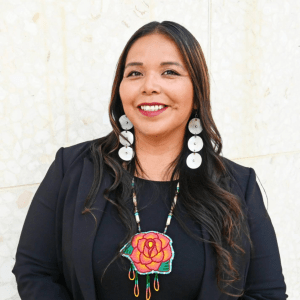
Roselynn Yazzie is the Assistant Editor for the Sho-Ban News, the official news source of the Shoshone-Bannock Tribes in Fort Hall, Idaho.
She is a Shoshone-Bannock tribal member and Diné.
She attended Idaho State University for business but later found her calling in journalism, which she’s done for 19 years.
Her work aims to tell stories of Indigenous voices and shed light on issues important to them.
Working in a small newsroom allows her to report on everything from education, tribal government, sports, and features, covering local and national news.
She enjoys photography, using her creativity in Photoshop, and has freelanced broadcast packages for ICT.
Yazzie has been a member of the Native American Journalists Association, now the Indigenous Journalists Association, since 2011.
As a member, Yazzie said she has submitted her work for the Indigenous Media Awards and worked as a mentor in the fellowship program for young Indigenous journalists.
Yazzie said she is enthusiastic about encouraging the next generation of Indigenous journalists.
Election Guidelines
The Native American Journalists Association bylaws state, under Article VII, Section 1, that the membership shall determine the election process.
In 1996, the NAJA membership voted to establish an Election Committee to organize and facilitate annual board elections. The following guidelines were adopted in Bangor, Maine, on June 22, 1996. The board later revised and adopted them on March 26, 2006, and updated them in March 2009.
Declaration of board candidacy:
Candidates must declare their intention to run for the board between Jan. 1 and six weeks before the election (deadline: June 14, 2024).
After their eligibility to run for the board has been determined, candidates shall submit a photo, bio and brief summary of what the candidate hopes to achieve through service on the board, including fundraising goals and ideas.
In addition, the NAJA Board of Directors has adopted the following definition of “media professional” and recommended procedure for the Election Board to follow:
“A media professional is defined as a journalist who works for either tribal media or mainstream media and earns 51 percent of his or her annual income through journalism. A journalist is someone who works in the gathering, writing, editing, photographing, publishing and disseminating of news as through, but not limited to, a newspaper, magazine, radio, television station, or World Wide Web publication owned and operated by a news media outlet.”
“Determining whether a board candidate is eligible to hold office shall be the responsibility of the Election Committee. When the NAJA office receives written notification that a NAJA member has declared his or her candidacy for office, the Election Committee has 21 days to notify the candidate in writing whether he or she is eligible to run for the NAJA board. The written determination of eligibility will be sent to the candidate, with copies to the NAJA President and Executive Director. Any candidate determined ineligible will receive an explanation for the ruling within the notification letter.”
“An election report shall be prepared and distributed during the annual membership meeting. The report shall include the list of board candidates and any explanations why a candidate was determined ineligible to run, along with general procedures followed during that year’s election process.”
(Note: This policy shall be published in every document that NAJA releases concerning board candidates)