
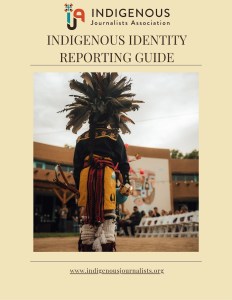
The Indigenous Journalists Association (IJA) releases a reporting guide for covering Indigenous identity during the Global Investigative Journalism Conference (GIJC) in Kuala Lumpur, Malaysia, from Nov. 20-24.
Indigenous identity can be complex and how it is defined varies around the world. Different Indigenous nations and peoples have different means of determining who is part of their community and who is not. Journalists often feel overwhelmed and unqualified to report stories involving questions of Indigenous identity and potential sources can exploit those fears by falsely claiming Indigenous identity. Individuals and groups fraudulently claiming Indigenous heritage for professional, political and financial gain is a growing problem worldwide. But with the complicated nature of Indigenous identity, how can journalists distinguish between fraudulent sources and legitimate ones? And how can they investigate stories involving Indigenous identity?
The Indigenous Journalists Association has created the following resource to help Indigenous and non-Indigenous journalists doing investigative reporting that involves questions of Indigenous identity. This how-to guide is designed to equip Indigenous and non-Indigenous journalists throughout the world with tips and strategies. This guide is an introduction for how journalists should approach the topic of Indigenous identity fraud and its impacts, and it should be looked at as a living document that can be expanded and updated.
IJA and the Global Investigative Journalism Network (GIJN) have been bringing Indigenous journalists together for three consecutive GIJN conferences. Over 1,500 attendees, including Indigenous journalists from around the world, are expected to attend the conference this year. IJA and GIJN are creating space for Indigenous and non-Indigenous journalists to gain the necessary skills and opportunity to investigate undercovered Indigenous stories.
Several IJA board members are attending the conference and participating in a range of activities, including training sessions, panels, and other events to promote Indigenous journalism. Board President Sunnie Clahchischiligi (Diné), Board Treasurer Joseph Lee (Aquinnah Wampanoag), Board Member Eden Fineday (Cree, Sweetgrass First Nation), Board Member Angel Moore (Cree, Peguis First Nation) and Board Member and INA co-founder Bryan Pollard (Cherokee Nation) will all be in attendance. Additionally, Tristan Ahtone, former IJA President, INA co-founder and Grist editor-at-large, is a featured speaker, appearing on two panels.
The Indigenous News Alliance (INA), a cross‑border network of Indigenous newsrooms from Canada, the United States, New Zealand and Australia, is hosting a launch event at the GIJC, aimed at sparking conversation and exploring opportunities for joint reporting, story‑sharing and investigative work.
IJA and INA representatives will come together to present a panel discussion on how to report stories that involve questions about Indigenous identity. Panelists will share examples of Indigenous identity fraud from around the world, tips on how to investigate these stories, and ways for reporters to evaluate sources who claim to be Indigenous.
For questions about the GIJC or IJA’s global initiatives, contact Francine Compton fcompton@naja.com.